Physical Address
304 North Cardinal St.
Dorchester Center, MA 02124
Physical Address
304 North Cardinal St.
Dorchester Center, MA 02124


A scarcity mindset is the deep belief that there’s never enough — not just money, but also opportunity, time, or resources.
It is not about being poor; it is about thinking poor. This mindset keeps people focused on survival instead of growth. Always surviving and never flourishing.
Those who see scarcity constantly measure, limit, and compare. Their attention goes to what is lacking rather than what can be created.
Scarcity thinking activates fear and survival instincts in the brain — the fight-or-flight mode.
When operating from fear:
The result: behaviours that destroy long-term wealth while providing temporary relief.
Watch for these patterns:
Recognising these signs is the first step to change.
The subconscious mind obeys belief. If you believe money is scarce, you will unconsciously act to make that belief true. Actions one might do:
Over time, this becomes identity: “I’m just not lucky with money.” Scarcity thinking traps behaviour and reinforces itself.
Many people grow up hearing messages like:
Repeated statements like these become mental rules that control adult financial behaviour. Poverty often continues not because of lack of opportunity, but because of inherited mindset patterns.
| Scarcity Mindset | Abundance Mindset |
| “There isn’t enough.” | “There’s always more to create or learn.” |
| Competes | Collaborates |
| Focuses on cost | Focuses on value |
| Hoards | Circulates |
| Fears loss | Trusts growth |
Abundance is not about having money. It is about believing in creation, value, flow, and that there is more out there.
Scarcity thinking quietly sabotages life:
Change begins with awareness: catch scarcity thoughts in real time. When you catch them, write them down on paper. Replace them with positive and abundant self-questions: “Why do I always learn how to afford what I need and want?” “Why do I always encounter opportunities for financial growth and improvement?”
As mentioned before, surround yourself with growth-minded people, content, and environments.
Practise generosity — giving shifts the brain from fear to abundance. But just because giving is a good thing, it does not mean you must go and blow your finances away to help others to the point you won’t be able to take care of your and your family’s wants and needs. That is stupid. Plan your generous project. Don’t ever be pressured to be generous. It must be your choice. And Generosity isn’t always with money. It comes in sharing resources and wisdom and experience.
But be careful with being generous. Not everyone who says they are your family or friends are with you. Some people will take an advantage of your generosity. This part is not a must, but if you do give, you must be very careful when choosing who to help. Another thing to mention, when you make it, don’t go around shouting to everyone about your money or achievements. Some people, whether stranger, friend, foe, or family, might attempt to bewitch you, literally, for your down fall. They might smile with you, hang out with you just to sniff for information about your strengths, weaknesses, goals, and accomplishments to use against you. Envy and jealousy are very dangerous emotions and can draw harmful attentions to yourself or your loved ones. Generosity is a good thing and can help you build an abundance mindset. I’m just saying to be strategic with how you help. There are many ways to help others without them knowing it was you. If you just sit and think, you can find creative aways to do this. There is always a way. At the end of the day, you will know that you helped someone, even if the world doesn’t know about it.
Set small financial wins to rewire confidence. Such as saving, investing, and learning.
Use repetition, emotion, and gratitude to train the mind to expect increase. Create positive self-questions and:
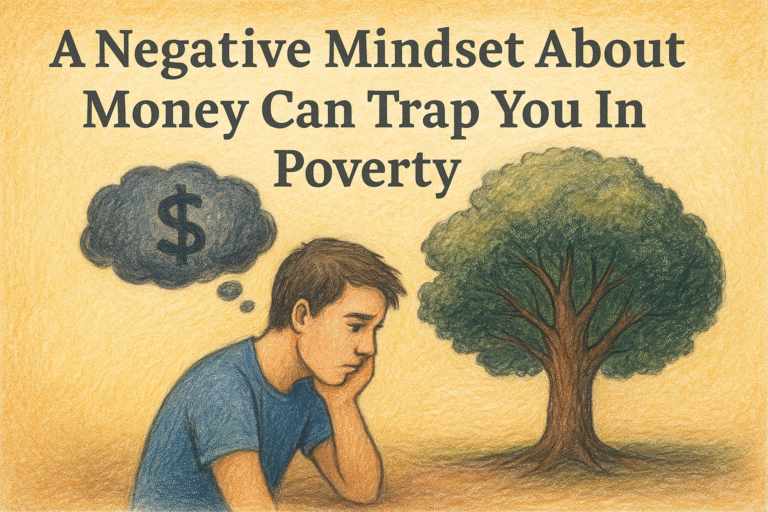
Poverty begins in the mind long before it appears in the wallet.
Person A is wealthy and has an abundance mindset and financial literacy. Person B is wealthy too, but has a Scarcity mindset and incompetent in the management of money. Later they both lose their wealthy tragically. Between the two, who has a better chance at escaping poverty?
Until scarcity thinking is defeated, no amount of effort or opportunity will create lasting wealth.